Europe planted the wrong trees for 250 years

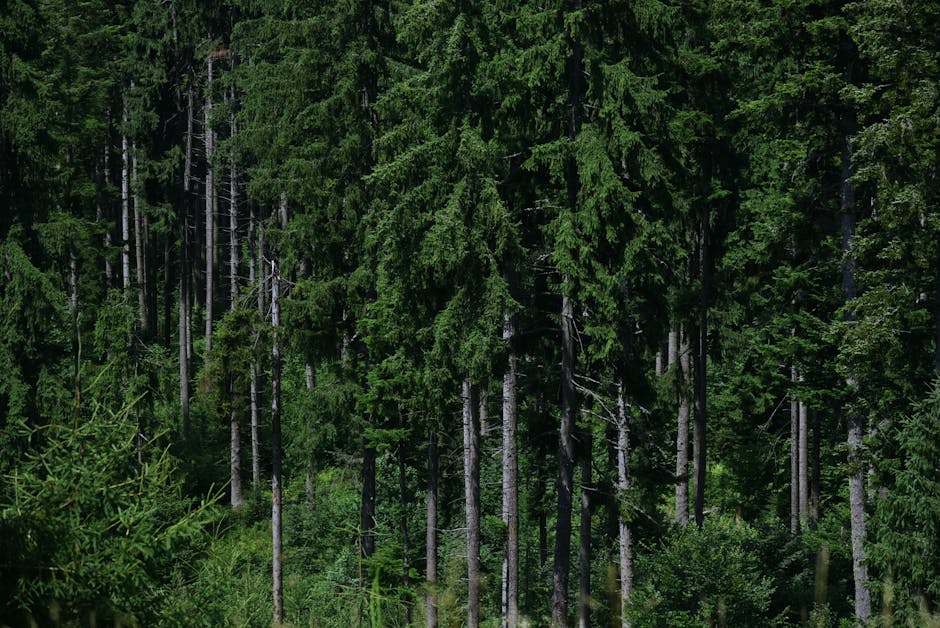
For 250 years, Europe’s managed forests have been a net carbon source, not a carbon sink. That’s the finding of a 2016 study published in the journal Science by Kim Naudts and colleagues, and it upends everything most people assume about tree planting and climate. The short version: Europe replaced natural broadleaf forests with conifer plantations, and those darker conifers absorb more solar radiation than the oaks and birches they replaced. The trees grew, but the planet got warmer anyway.
This is the single best case study for why tree species selection matters more than tree quantity. And it applies directly to your yard.
What did the study actually find?
Researchers at the Max Planck Institute for Meteorology and the Laboratory of Climate and Environmental Sciences (LSCE) in France reconstructed 250 years of European forest management history. They combined land-use data, satellite observations, and climate models to measure the net climate effect of all that forestry work.
Since 1750, Europe’s managed forest area has grown by about 386,000 square kilometers. That’s roughly 10% more forest cover than existed before the Industrial Revolution. On paper, good news. In practice, the opposite.
The problem was species conversion. Foresters systematically replaced native broadleaf forests of pedunculate oak (Quercus robur), European beech (Fagus sylvatica), and silver birch (Betula pendula) with Scots pine (Pinus sylvestris) and Norway spruce (Picea abies) plantations. The conifers grow faster and produce straighter timber. Sawmills love them. The climate does not.
The study found that 85% of European forests are now managed by humans. And the environmental impact of non-native trees extends well beyond carbon.
Why darker trees warm the planet
This is the part most people miss when they think about trees and carbon.
Yes, trees absorb CO2. That’s real. But trees also interact with climate through something called albedo, the fraction of sunlight a surface reflects back into space. A snow-covered field of bare winter oaks reflects a lot of sunlight. A dark green spruce plantation absorbs it.
Here’s how the numbers break down from the Naudts study:
- Carbon storage: European forests did absorb carbon as they grew, storing roughly 3.1 billion metric tons of carbon since 1750
- Albedo change: The shift from lighter broadleaf canopies to darker conifer canopies decreased albedo, meaning forests absorbed more solar energy
- Evapotranspiration: Managed forests transpire less water than old-growth stands, reducing the cooling effect of evaporation
- Net result: The combined albedo and evapotranspiration changes produced a warming of about 0.12 watts per square meter of radiative forcing, enough to partially or fully cancel out the carbon benefit
That 0.12 W/m2 translates to roughly 0.12 degrees Celsius of additional warming, attributed directly to the species swap. The carbon benefit of growing all those trees was negated by the fact that they were the wrong color.
How monoculture makes everything worse
The species conversion wasn’t just a color problem. It created the largest managed monoculture in the Northern Hemisphere.
Norway spruce now dominates vast areas of Germany, Scandinavia, and Central Europe where it never grew naturally. These plantations share three traits that make them fragile:
Shallow roots. Norway spruce has a shallow, plate-like root system. In the windstorms that have intensified across northern Europe, entire plantations blow over like dominoes. The 1999 storms Lothar and Martin flattened 360 million cubic meters of timber across France, Germany, and Switzerland. Most of it was spruce.
Bark beetle vulnerability. The European spruce bark beetle (Ips typographus) has killed hundreds of millions of spruce trees since 2018 across Germany, the Czech Republic, Austria, and Poland. Drought-stressed monoculture stands are perfect targets. A beetle outbreak in a diverse forest burns itself out. In a pure spruce stand, it spreads until there’s nothing left.
Drought stress. Spruce evolved for cool, wet Scandinavian conditions. Plant it 500 miles south in warming conditions and it struggles. Germany lost an estimated 245,000 hectares of spruce forest between 2018 and 2020 alone, according to the German Federal Ministry of Food and Agriculture. That’s dead trees releasing their stored carbon right back into the atmosphere.

The International Society of Arboriculture (ISA) promotes a core principle called “Right Tree, Right Place.” Urban foresters follow the 10-20-30 rule: no more than 10% of any single species, 20% of any genus, and 30% of any family in a city’s tree canopy. Europe’s commercial foresters did the opposite for two and a half centuries. They put the wrong tree in the wrong place, at continental scale.
Managed forests store less carbon than wild ones
Dr. Kim Naudts, the study’s lead author, stated it clearly: “Even well-managed forests today store less carbon than their natural counterparts did in 1750.”
That’s a hard sentence to read if you assumed planting more trees automatically fixes the climate. Here’s why managed forests fall short:
Harvesting disturbs the soil. Forest soil holds more carbon than the trees above it. Heavy machinery compacts it. Logging roads fragment it. Clear-cutting exposes it to sunlight and rain, accelerating decomposition. A single harvest cycle can release decades of accumulated soil carbon in a few years.
Short rotation cycles. Commercial spruce plantations in Central Europe run on 80-year rotations. The trees get cut before they reach peak carbon storage. An unmanaged oak-beech forest accumulates carbon in its wood, bark, leaf litter, dead branches, fungal networks, and soil for 300 to 500 years. Cutting it every 80 years is like withdrawing from a savings account that hasn’t matured.
Less structural complexity. Old-growth forests have massive deadwood logs on the forest floor, standing snags, multi-layered canopies, and deep humus. All of that stores carbon. A managed plantation has rows of same-aged trees and a bare, raked floor. The carbon storage difference is measured in hundreds of tons per hectare.
Approaches like regenerative agriculture aim to reverse these patterns in farming, and the same thinking applies to forests: work with natural systems, not against them.
Europe is starting to fix it
The lesson landed. Since the study’s publication, and especially after the catastrophic spruce die-offs of 2018-2020, European forestry policy has shifted.
Germany’s National Forest Strategy now calls for converting pure conifer stands to mixed forests. The target: increase the share of climate-adapted broadleaf species like oak, beech, and hornbeam in formerly all-spruce regions. Saxony alone plans to convert 100,000 hectares.
France’s Office National des Forets has been planting drought-resistant oak species (including Mediterranean species like holm oak, Quercus ilex) farther north than they historically grew, anticipating where climate zones are headed rather than where they were. The UC Davis Arboretum grows holm oak in the Sacramento Valley, where it performs well as an evergreen shade tree in full sun with very low water once established. It reaches 40-60 feet tall and handles our hot, dry summers without complaint. If France is looking for climate-adapted oaks, they could do worse than checking what thrives in Davis.
The Czech Republic, which lost roughly 10% of its spruce forests to bark beetles, now mandates that replanting include at least 30% broadleaf species.
These conversions take decades. An oak planted today won’t provide serious canopy for 30 years. But the direction is right.

What this means for your yard
You’re not managing a European timber plantation. But the principles scale down to a single property.
If you’re planting trees partly for shade and partly because you want to do something good for the environment, broadleaf deciduous trees are the better call. Here’s why:
Summer cooling, winter warming. A deciduous tree shades your house in July and drops its leaves in November. Sunlight reaches your roof in winter when you want it. A dense spruce or pine blocks light year-round. The energy savings are real. A well-placed shade tree on the south or west side of a house can cut cooling costs by 20-35%, according to the USDA Forest Service. Our guide to the best trees for summer shade and winter sun covers specific species for this.
Better for soil and wildlife. Deciduous leaf litter feeds earthworms, fungi, and soil microbes. Conifer needle litter acidifies soil and decomposes slowly. If you want a yard that supports birds, pollinators, and healthy soil, broadleaf trees (especially natives) do more work.
Species diversity in your neighborhood. That ISA 10-20-30 rule applies to neighborhoods too. If every house on your block has a Leyland cypress, one disease takes them all. Mix it up. Plant an oak on one corner, a maple on another, a redbud by the front walk. If you’re looking for broadleaf trees that earn their space, check out the best trees for fall color or our picks for the best trees for small yards.
Right tree, right place. Match the species to your hardiness zone, your soil, your space, and your water availability. The UC Davis Arboretum All-Stars program does this homework for you if you’re in the Sacramento Valley. Every plant on their list has been tested on campus in Davis, surviving valley heat, clay soil, and limited irrigation. Their tree selections include Valley Oak, Coast Live Oak, Chinese Pistache, Western Redbud, and Desert Willow, all proven performers that need minimal summer water once established. Don’t plant what looks good in the nursery. Plant what works where you live.
The bottom line
Europe planted 386,000 square kilometers of the wrong trees over 250 years and managed to make the climate worse. The species mattered. The management style mattered. The monoculture mattered.
In your yard, the stakes are smaller but the lesson is the same. Plant broadleaf deciduous trees. Plant native species when you can. Plant a mix, not a monoculture. And put them where they’ll actually do some good, on the south and west sides of your house, away from your foundation, with room to grow.
One well-chosen oak will outlast every Norway spruce on your block, store more carbon, cost less to maintain, and look better doing it.
Frequently asked questions
Why did Europe plant so many conifers? Money. Scots pine and Norway spruce grow faster than broadleaf trees and produce straight timber that sawmills can process efficiently. Starting in the 1700s, European foresters prioritized wood production over ecosystem function. The climate consequences weren’t understood until the 2016 Naudts study quantified them.
Do conifers absorb more CO2 than broadleaf trees? Fast-growing conifers can absorb CO2 at a higher annual rate when young. But they’re harvested on shorter cycles, so the carbon gets released sooner. And their darker canopy absorbs more solar radiation, partially or fully canceling the carbon benefit. Over a 200-year timeframe, an unmanaged broadleaf forest stores significantly more total carbon.
Should I never plant a conifer? Conifers have their place. A windbreak of eastern white pine on the north side of your property saves heating costs. A single Colorado blue spruce in the right spot looks great. The problem is planting nothing but conifers, especially in places where broadleaf trees would do better. Diversity wins.
What are the best broadleaf trees for carbon storage? Oaks lead the list. A mature white oak (Quercus alba) in zones 3-9 can store over 20,000 pounds of carbon over its lifetime. American beech, tulip poplar, and sugar maple are also strong performers. The bigger the tree at maturity, the more carbon it stores.